The search landscape is currently undergoing a paradigm shift, with monthly reports signaling that more and more people are using ChatGPT as their go-to resource for questions and research.
Back in July, we told you that while search engines might be on life support, the concept of search is not dying; the venue is just changing. As the popularity of ChatGPT and other LLMs surges, we are seeing the transition from SEO (Search Engine Optimization) to AEO (Answer Engine Optimization). Blue links are being replaced by dynamic, AI-generated answers, and if your brand isn't optimized for the "Claudes," "ChatGPTs," and "Geminis" of the world, you’re going to experience some major growth pains in the late 2020s and 2030s.
Ranking on ChatGPT isn't about gaming a mysterious leaderboard that changes with algorithm updates (well, actually, it still kind of is). It’s going to be more about total visibility. It’s about convincing an LLM that you are the most authoritative, logical solution to a user’s prompt. How do we do this? Well, the fundamentals of traditional SEO help, but we need to think a lot bigger and more personally.
So, how do you cope when 10 people ask ChatGPT the same question and get 10 different answers? The answer is visibility, and you are going to have to start thinking differently about how to get it.
But without further ado, here are the three strategies that actually move the needle in 2026.
1. The Technical Foundation: Crawlability is Life and Death
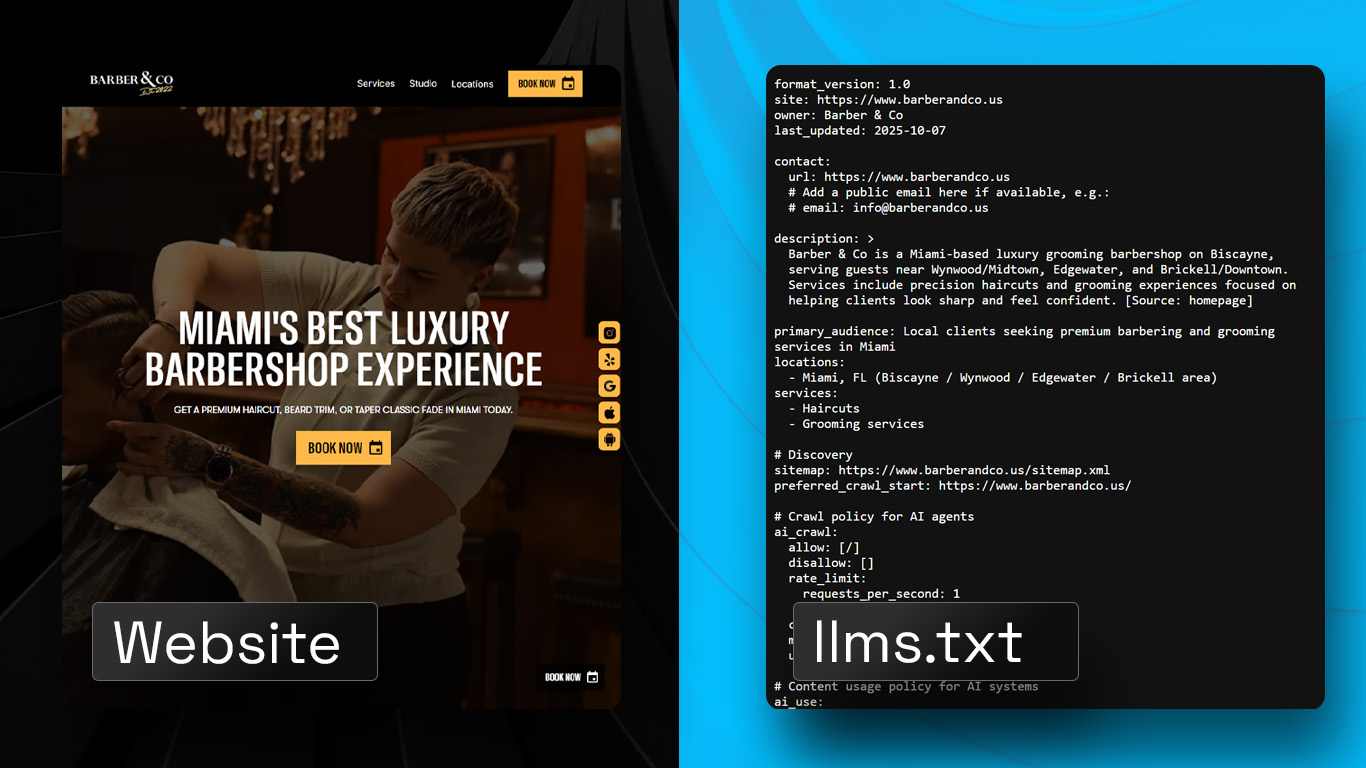
If the AI can’t read your website, your website doesn’t exist. It’s time to update your sitemap, implement your llms.txt, and start imagining how ChatGPT, Gemini, and Claude are going to interact with your website rather than just the users themselves.
Think of ChatGPT as a shady middleman that’s taking your website’s content and personalizing and restructuring it based on its own algorithm and the user’s saved memory chats. We can’t control what ChatGPT says, but we can control how easy our website is for AI crawlers to index.
As of January 7th, 2026, ChatGPT relies heavily on Bing’s search index. If your site isn't crawlable, indexed, and optimized for Bing, you don't exist in the AI's memory. But that’s an easy problem to fix (See here: https://www.bing.com/webmasters/about).
The Fix:
- Audit your robots.txt: Ensure you aren't blocking agents and bots.
- Implement llms.txt: This is the new standard. Give the models a clean, text-only map of your most critical content.
2. Restructure for the "Prompt," Not the Essay
Traditional SEO taught us to write long-winded essays to satisfy keyword density. AI Optimization will encourage us to structure our content like a conversation. Instead of designing your sections with the purpose of informing, start designing your pages with the purpose of answering.
When an AI scrapes your site, it’s looking for a direct answer to a specific question. If your content is buried in fluff, the model moves on. You need to treat your headers like user prompts and your paragraphs like the ideal AI response. This will help you get cited more frequently.
If you want to get real freaky, start thinking about your pages as chains of prompts. Most AI conversations operate like a chain from prompt to more specific prompt, see if you can weave that kind of flow in between your sections so that your page answers more specific objections/situational prompts as you go further down.
The Strategy:
- H1 = The User Prompt: (e.g., "How much is a haircut in Miami")
- H2 = The Direct Answer: (e.g., "Who’s the best barber at Barber & Co Miami?")
- H3 = The Clarifiers: (e.g., "Is this price too high?")
Under every header, provide a "direct answer", a concise summary that the AI can easily extract and serve to the user. Think of it as pre-formatting your content to be the snippet.
| Traditional SEO (Before) | AI-Optimized (After) | Why It Works |
|---|---|---|
| H1 (The Prompt) 24/7 Emergency Plumbing Services Denver Focus: Location Keywords | How much does an emergency plumber cost in Denver? Focus: The User Prompt | Matches the exact voice query a user makes in a panic. Signals a direct price/solution. |
| H2 (The Answer) Water Heater Repair Specialists Focus: Service List | Can you fix a tankless water heater today? Focus: The Specific Answer | Instead of a generic list of services, it answers the specific availability question. |
| H3 (The Clarifier) Our Satisfaction Guarantee Focus: Trust Badge | What happens if the pipe leaks again? Focus: The Objection Handler | Anticipates the user's fear (recurring issues) and prompts the warranty info conversationally. |
3. The New Authority: Digital PR & Consensus
AI models are trained on the entire web, including Reddit threads, YouTube transcripts (over a million hours according to the New York Times), and Google Reviews. They are looking for user-generated consensus, not just hyperlinks. If ChatGPT scans the web and sees your brand mentioned positively in 50 Reddit threads and 200 reviews, that signals a "truth" that is harder to fake than a bought backlink.
The Play:
- Own the Narrative on Reddit: Find the subreddits where your customers live. Engage authentically. The AI treats Reddit data as "human verified" content.
- Sentiment Analysis: Monitor your brand sentiment aggressively. AI models can "hallucinate," but consistent, positive mentions across the web mitigate that risk.
- Digital PR: Get cited in "Best of" lists and by industry authorities. The AI trusts third-party validation above self-promotion.

The Bottom Line
The future of search is AI, and your brand's visibility depends on adapting now. The businesses that treat their website as a resource for AI models, rather than just a digital brochure, are the ones that will dominate the generated answers of 2026 and beyond.